Suite Dreams: UNLV Students Use Virtual Reality to Design and Train for Hospitality and Architecture Careers
Suite Dreams: UNLV Students Use Virtual Reality to Design and Train for Hospitality and Architecture Careers
Listen to this article
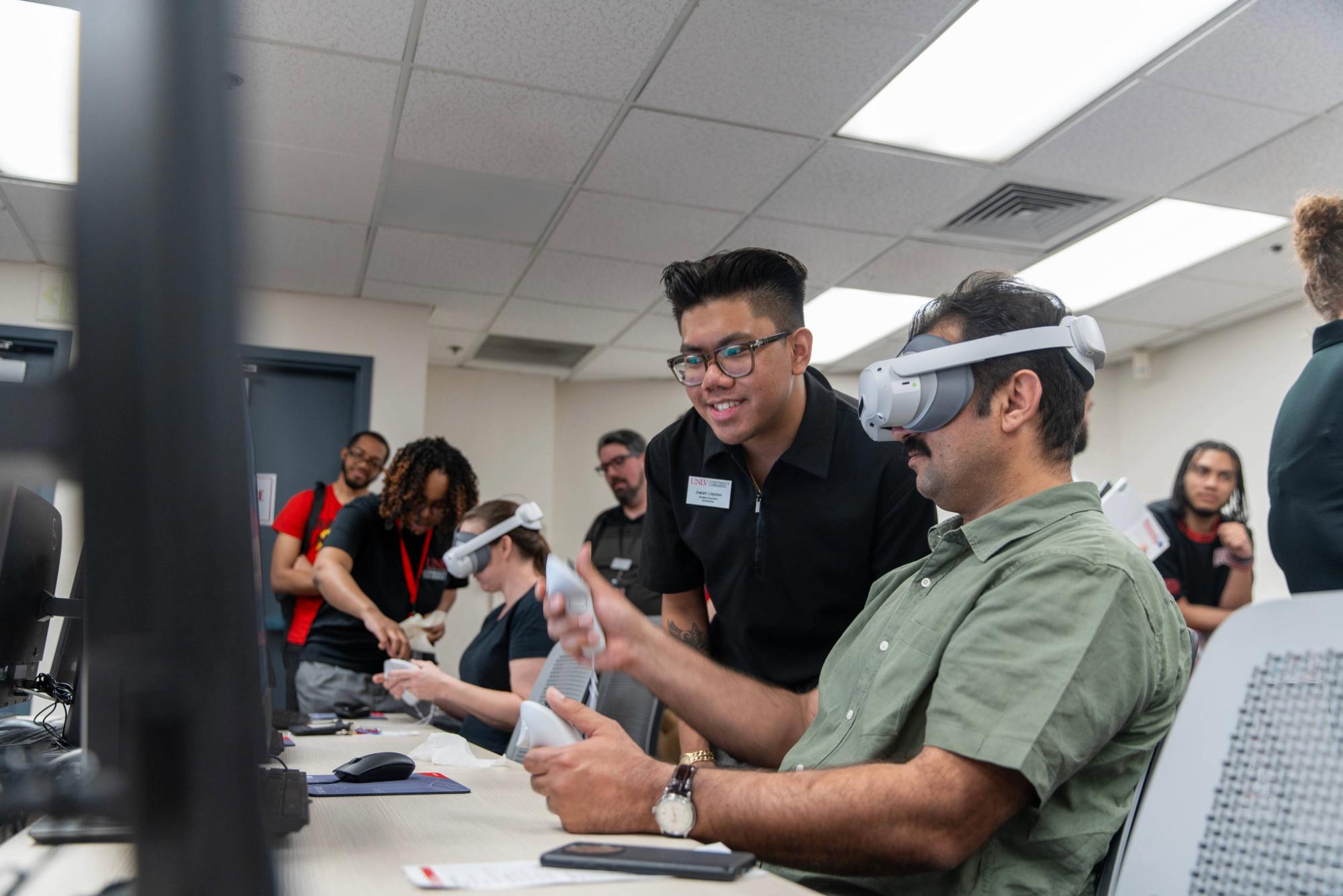
UNLV students are traveling back in time to explore some of Las Vegas’ most iconic hotels, all thanks to virtual reality (VR) technology on campus.
When Glenn Nowak, associate professor of architecture, first experienced the VR landscapes inside the university's new Immersive Learning Lab, he knew right away that the possibilities for his students were endless.
“Conversations between colleagues just started organically on how we bring this technology to the students,” Nowak said when discussing his first impression of the VR facilities on campus. "Any tool that helps improve visualization in architectural design has always been of interest to us."
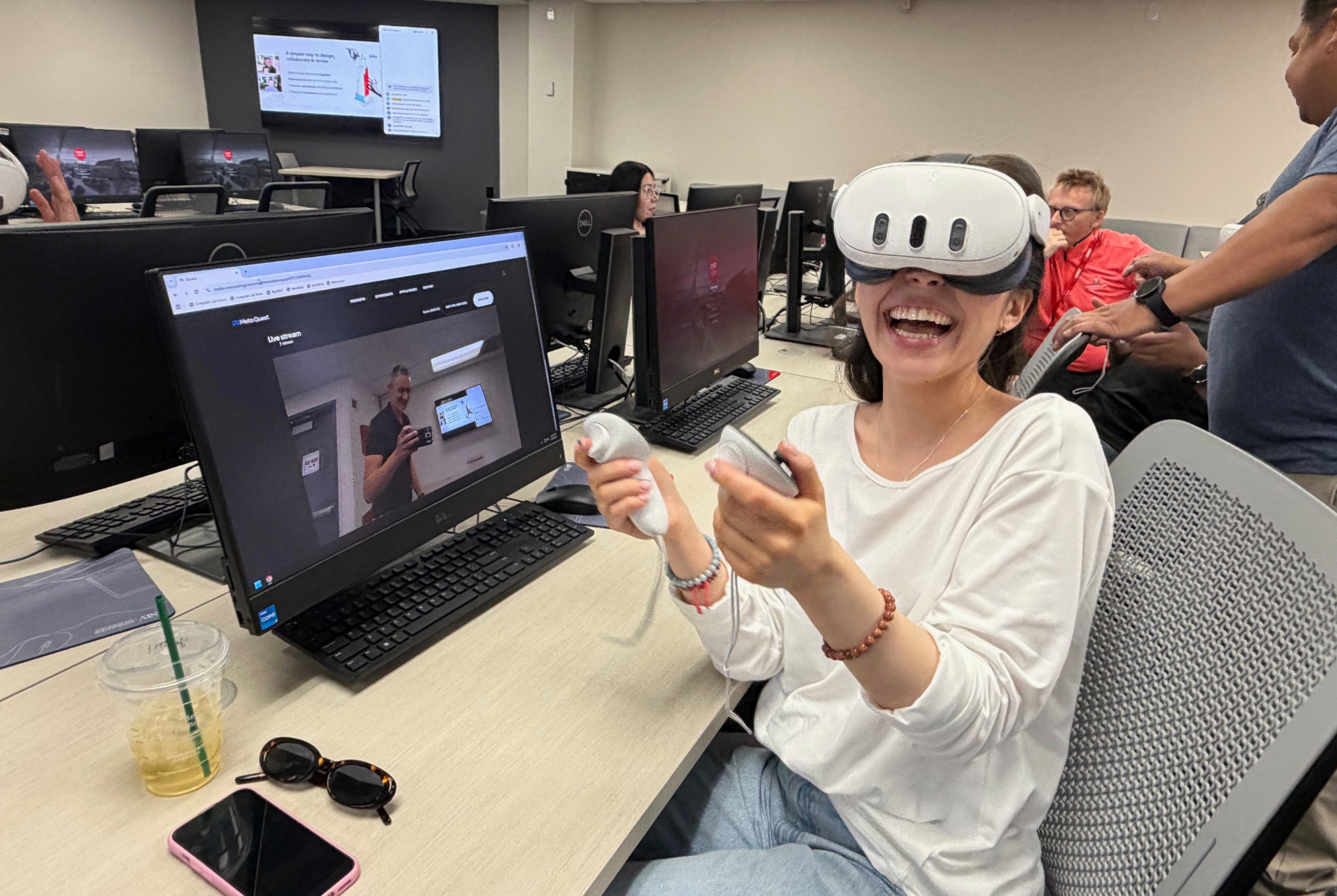
In Nowak’s tourist facility design and development course, students are turning historic documentation of resorts into three-dimensional (3D) models. They are using specialized software in the lab, such as Arkio, a collaborative VR design tool that lets users create, edit, and experience architectural spaces in real time. With this technology, students are now visualizing their work beyond the design process and exploring future spaces not yet built.
Stepping Into Iconic Vegas Buildings of the Past
To enhance their understanding, students in Nowak’s class are working with UNLV’s Special Collections and Archives to take sketches of former Las Vegas hotels and replicate them in a virtual space. Using blueprints of the original MGM Grand Hotel and the Moulin Rouge Hotel & Casino, students are learning about historic landmarks firsthand and digitally preserving spaces that no longer exist.
“It’s important for students to learn beyond just a drawing or an image on the screen, but instead put themselves in these spaces so they understand the history of these buildings,” Nowak said. “It’s not all about using the physical tools themselves, but more so the opportunity of leveraging technology to do things we couldn't do before.”
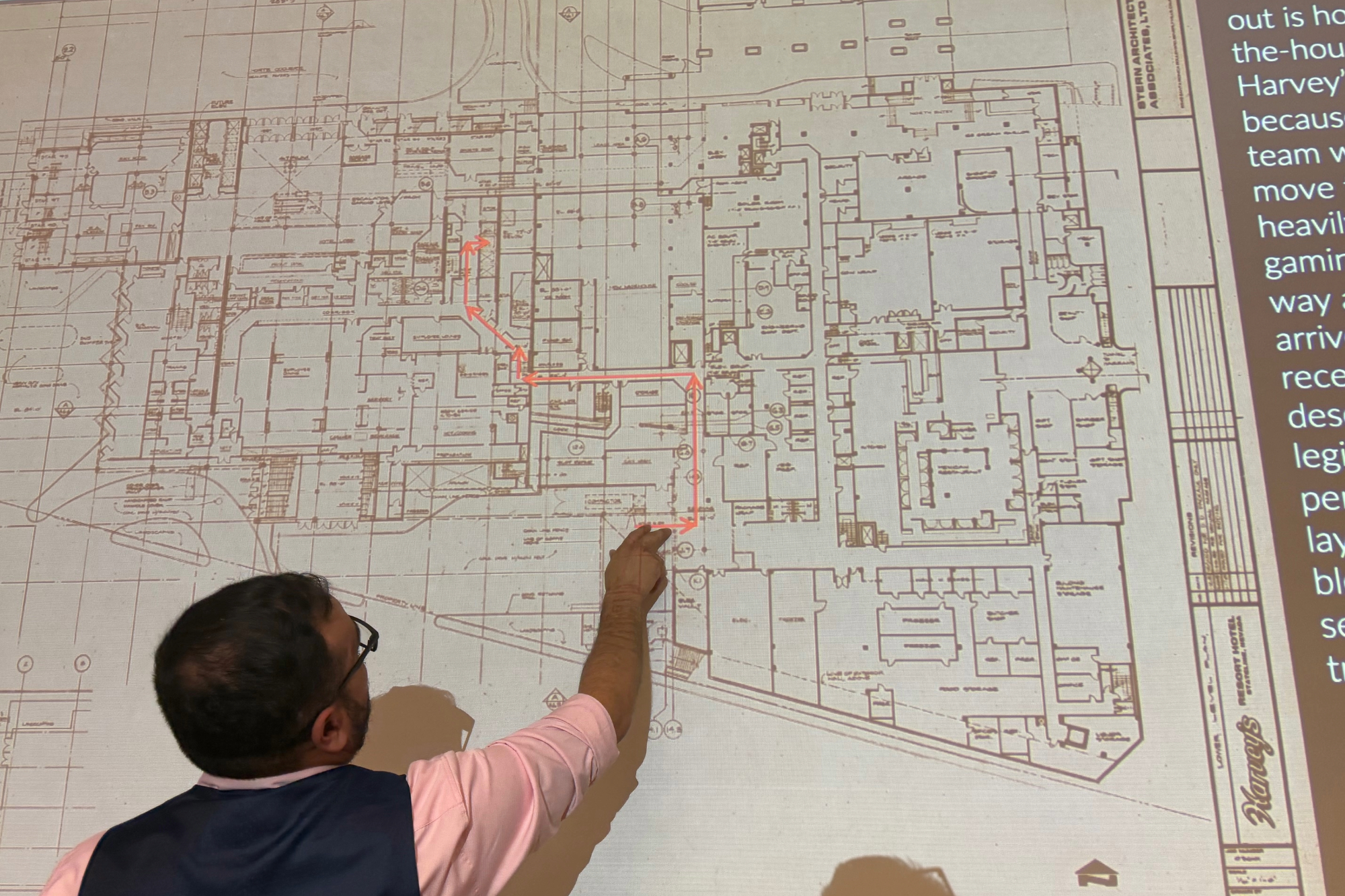
Nowak explained that these immersive learning tools are helping architecture students analyze design decisions that impact all sectors of the hospitality industry, from employee training to improved safety navigation. As students become immersed in these spaces, they can easily spot weaknesses in their design and make changes in real time.
A Virtual Look Into Students’ Future Careers
VR extends beyond architecture. Hospitality students are also leveraging immersive learning technology to stay one step ahead of their future careers.
In Cass Shum's graduate-level courses, the associate professor of hospitality organizational behavior is putting her students' conflict-resolution skills to the test with Bodyswaps. With this soft-skills training software, Shum's students can quickly immerse themselves in a variety of unique workplace scenarios and interact with customers in a fully immersive 3D environment.
“Teaching students with VR removes any passive learning because it requires them to be fully engaged with the content,” Shum said when speaking about why she enjoys using Bodyswaps for her coursework. “This is a more immersive version of the roleplay scenarios we have used in the past. It helps avoid boring lectures and allows more types of learning blended together.”
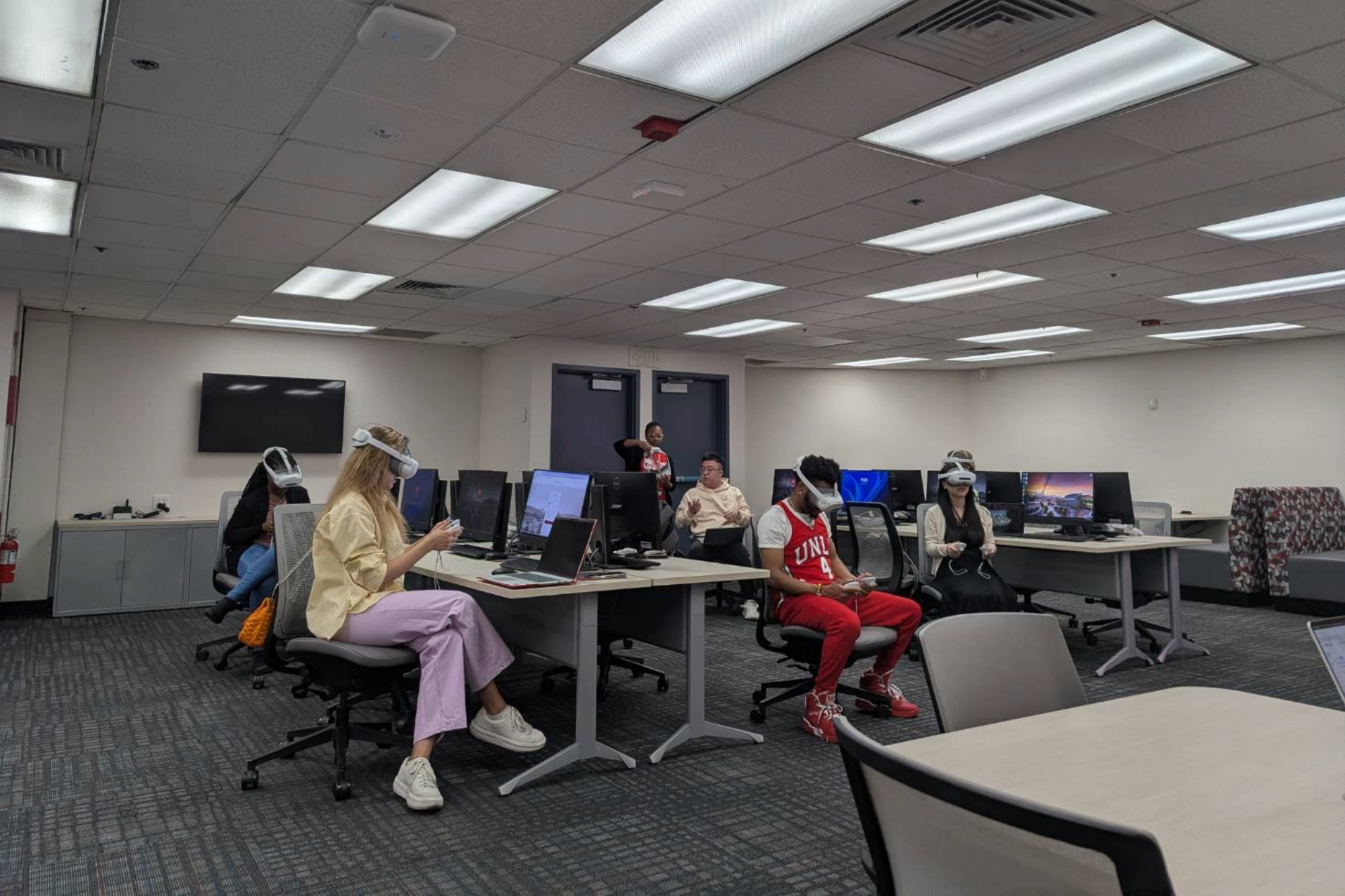
Beyond pursuing careers in the hospitality industry, many of Shum’s students also plan to teach and inspire future students with backgrounds similar to their own. Learning how to use emerging technologies early on lets them reflect on how they’d like future hospitality students to learn effective customer service skills.
“Using new technology is a learning curve, but this software and the immersive learning lab team were really easy to work with,” Shum said. “We want to make sure students are career-ready and know how to use these emerging technologies that are now available to them.”
The immersive learning lab team offers consultations and workshops for instructors who would like to explore the space’s extended reality technology further and find ways to implement these tools in courses.
Related Articles

Defending Your Turf: Your Defensive Playbook Against the New Cyber Playing Field
Cybercriminals are changing up their playbook with malicious QR codes and deepfakes. Here are ways to protect yourself and your teammates.
Las Vegas Students Learn to Create Tools and Solve Problems with AI at UNLV
UNLV’s AI Explorers Camp gave 25 middle and high school students hands-on experience with artificial intelligence and plans to expand next summer.
What UNLV Faculty and Staff Should Do Before Fall Semester Begins
From eduroam WiFi to WebCampus, here’s what to check to get you ready for the first day of the semester.